
Receive a summary of the selected filters by email each week.
Your subscription has been created successfully
For your security you need to activate your subscription. We have sent the activation link to your e-mail address.
Data validation failed on server.
Unfortunately, the validation of your entered data failed on server.
IP-adress denied
Unfortunately, your IP is blocked for about 1 minute. You have sent too many requests.
General system error
Unfortunately, there was a problem processing your request. Please try again later.
First insights into the DACHSER platform
DACHSER is transferring its range of logistics services to the digital world. As a company-wide digitalization project, the DACHSER platform is a central building block for fundamentally redesigning the customer experience. At the transport logistic trade fair, customers and interested parties were given their first glimpse of the platform, which will be available to all DACHSER customers from 2024.
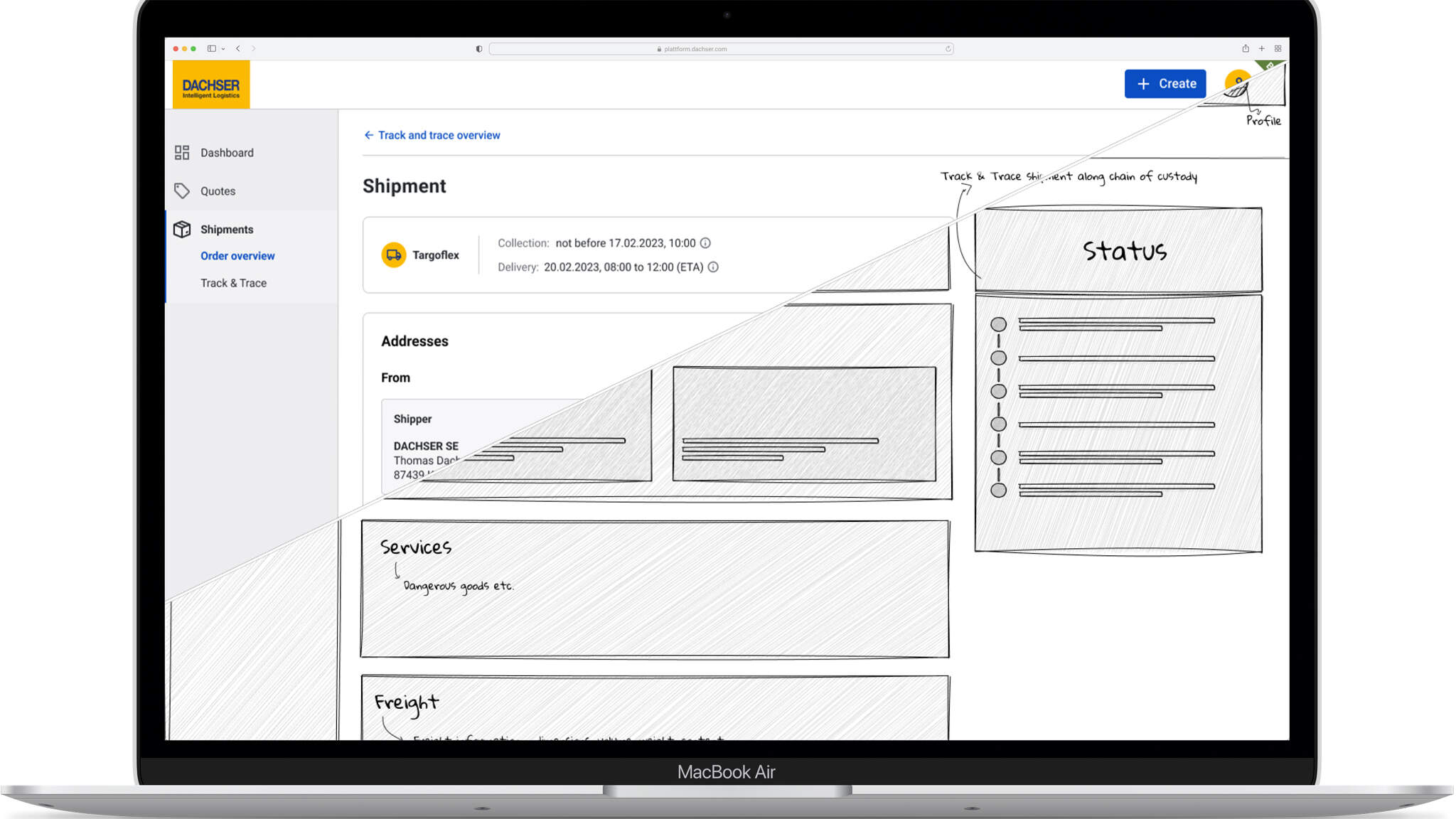
From concept to platform: the interface of the new DACHSER platform
For many years, DACHSER has been developing software and systems in-house that are tailored entirely to the needs of its customers. The DACHSER platform is a logical continuation of this philosophy. The platform is currently being developed in an agile project setup, i.e. in direct exchange with selected pilot customers.
Transparent one-stop solution
The DACHSER platform brings together the services of the Road Logistics and Air & Sea Logistics business fields in a user-friendly, modern interface. Supplemented by innovations such as end-to-end tracking across all freight routes, this creates a customized, digital one-stop solution for customers. DACHSER is thus taking a major step toward completely transparent flows of goods and data, especially with regards to intercontinental transports using different modes of transport.
The DACHSER platform is developed iteratively and in direct exchange with customers.
Product development is taking place within iterative testing and development phases. Since the start of the project, intensive research phases have been used to query customer needs and obtain feedback on product designs. Since April 2023, pilot customers have already been working with a first version of the platform. All research results are always incorporated into the subsequent development phase. This way of thinking and working is an expression of an agile, digital mindset that DACHSER is promoting throughout the company as part of its digitization strategy.
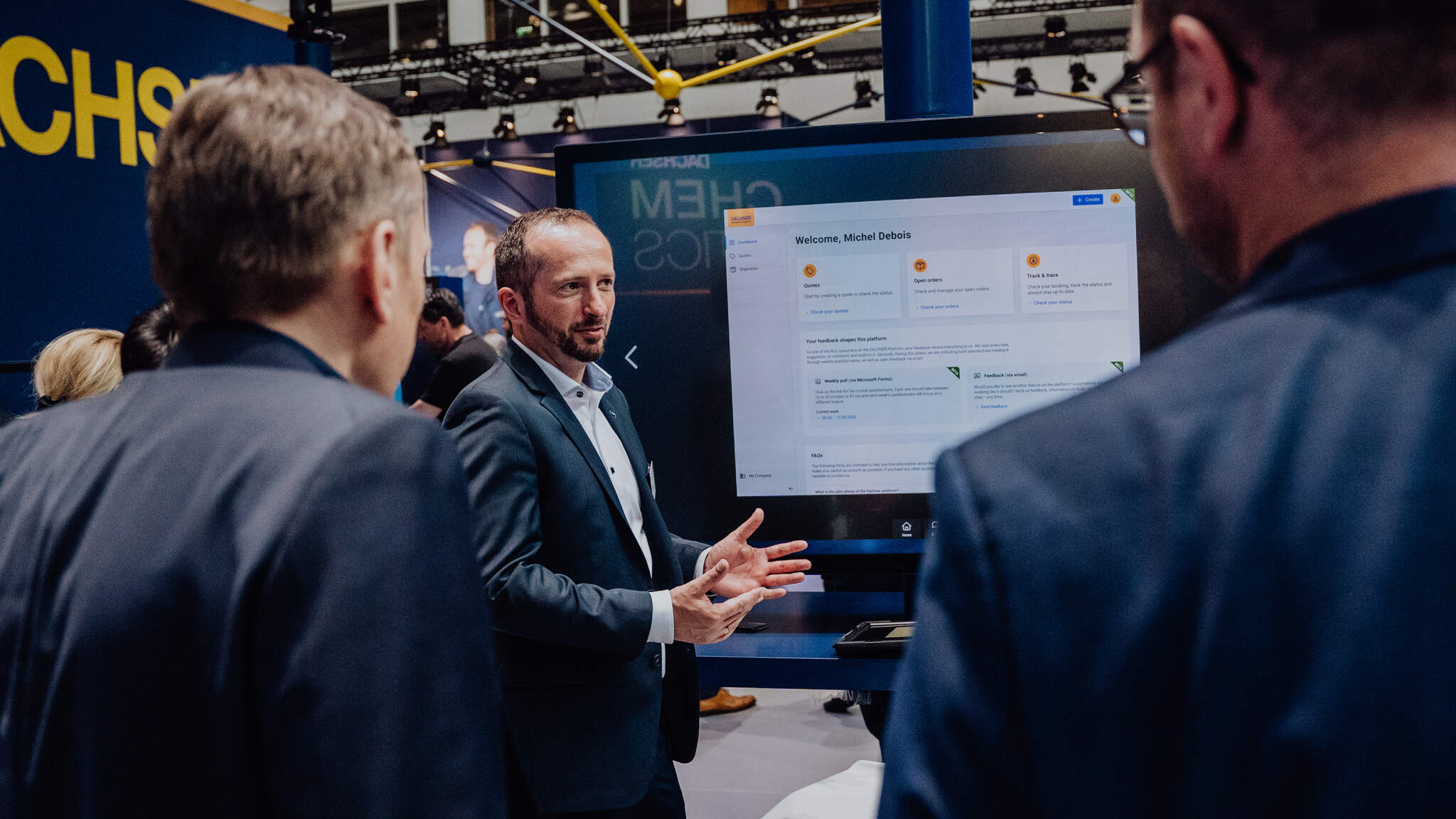
Ralf Messing, Team Leader eLogistics Consulting at DACHSER, demonstrates the dashboard at the transport logistic trade fair in Munich.
Highlight at transport logistic 2023
Insights into the new platform were offered for the first time at the leading transport logistic trade fair in Munich. DACHSER customers, interested parties, and the media were able to learn about the project's vision, development, and timeline roadmap on interactive screens.
Experts estimate that digital connectivity will reach a data volume of 400 trillion gigabytes as early as 2030. Whether or not that happens, one thing’s for sure: data collection and processing are increasingly determining and changing the way we live and work. And one other thing is true: handling data responsibly makes life easier and offers many opportunities. Especially in logistics.
Lunar New Year 2025 – Key dates and impact on logistics
The Lunar New Year festival for the upcoming “Year of the Snake” begins on January 29, 2025, and it is the largest celebration in Chinese communities, where people celebrate the start of a new year with their families.
DACHSER platform is honored with the Annual Multimedia Award
The DACHSER platform receives the prestigious Annual Multimedia Award in silver in the Digital Services category: Apps, Tools & Voice User Interfaces etc. The award confirms that the digital customer platform meets and in some cases exceeds all basic requirements in terms of user-friendliness, design and stability. With this award, the DACHSER platform also receives external recognition that it meets DACHSER's strict security and quality standards.
Nobody can predict the future—not politicians, not scientists, and not economists. However, that doesn’t mean we can give up the constant task of classifying current developments, tracking trends, and drawing the appropriate conclusions for tomorrow. This requires us to look closely, ask questions—and, most importantly, listen. That might sound obvious, but it can be a real challenge in day-to-day business.